Photography by Ed Phillips
Still-life and Wildlife Images
  • Home
  • About
  • Still-Life
  • Invertebrates
    • The Latest Ten
    • Shop
      • Solo Exhibition
      • British Wildlife Photography Awards
      • In a Staffordshire Garden
      • Solo Exhibition of Still-life Photography
      • A garden springtail survey
      • All posts
    • Contact
    • Search
  • Home
  • About
  • Still-Life
  • Invertebrates
  • The Latest Ten
  • Shop
    • Solo Exhibition
    • British Wildlife Photography Awards
    • In a Staffordshire Garden
    • Solo Exhibition of Still-life Photography
    • A garden springtail survey
    • All posts
  • Contact
  • Search
    • The Latest Ten
    • Shop
      • Solo Exhibition
      • British Wildlife Photography Awards
      • In a Staffordshire Garden
      • Solo Exhibition of Still-life Photography
      • A garden springtail survey
      • All posts
    • Contact
    • Search
  1. Gallery /
  2. Coleoptera (Beetles) /
  3. Coccinellid Beetles /
  4. Harmonia axyridis (Harlequin Ladybird)

Harmonia axyridis (Harlequin Ladybird)

The Harlequin Ladybird (Harmonia axyridis) spread to the UK from Europe in 2004. Since then it has expanded rapidly northwards, now covering most areas in England and Wales with a few sightings in Scotland and Ireland. Its name comes from the fact that it exists in many colour forms. In fact, it has been recorded in 100 different colour patterns. Some specimens are reddish-orange with black dots, others black with red patches. They exist in three main forms; succinea, spectabilis and conspicua.

Unlike most other ladybirds, the Harlequin does not stick to one type of food. Once it has finished feeding on aphids, it then turns its attention to other ladybird eggs and larvae and even the eggs and caterpillars of moths and butterflies. The main reason Harlequin Ladybirds pose a threat to our native ladybirds, is that they have such voracious appetites that they easily out-compete native ladybirds for food. They have been described as "the world's most invasive ladybird".
The Harlequin Ladybird (Harmonia axyridis) spread to the UK from Europe in 2004. Since then it has expanded rapidly northwards, now covering most areas in England and Wales with a few sightings in Scotland and Ireland. Its name comes from the fact that it exists in many colour forms. In fact, it has been recorded in 100 different colour patterns. Some specimens are reddish-orange with black dots, others black with red patches. They exist in three main forms; succinea, spectabilis and conspicua....
Read more
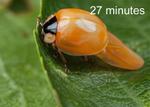
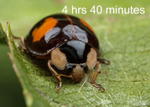
Newly-emerged - spectabilis form. From a timed sequence of images, showing how the ladybird acquires its typical colo…

Harlequin Ladybird

Newly-emerged - spectabilis form. From a timed sequence of images, showing how the ladybird acquires its typical colouration. See Blog post.
Photo: Harlequin Ladybird. Newly-emerged - spectabilis form. From a timed sequence of images, showing how the ladybird acquires its typical colouration. See Blog post.
Newly-emerged - spectabilis form. From a timed sequence of images, showing how the ladybird acquires its typical colo…

Harlequin Ladybird

Newly-emerged - spectabilis form. From a timed sequence of images, showing how the ladybird acquires its typical colouration. See Blog post.
Photo: Harlequin Ladybird. Newly-emerged - spectabilis form. From a timed sequence of images, showing how the ladybird acquires its typical colouration. See Blog post.
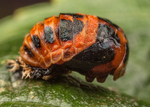
Harlequin Ladybird pupa, showing discarded larval skin. Warwickshire, August 2012.

Harlequin Ladybird Pupa

Harlequin Ladybird pupa, showing discarded larval skin. Warwickshire, August 2012.
Photo: Harlequin Ladybird Pupa. Harlequin Ladybird pupa, showing discarded larval skin. Warwickshire, August 2012.
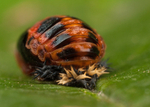
Harlequin Ladybird pupa, showing discarded larval skin. Warwickshire, August 2012.

Harlequin Pupa

Harlequin Ladybird pupa, showing discarded larval skin. Warwickshire, August 2012.
Photo: Harlequin Pupa. Harlequin Ladybird pupa, showing discarded larval skin. Warwickshire, August 2012.
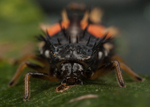
Harlequin Ladybird Larva, showing head and mouthparts. Warwickshire, August 2012.

Harlequin Larva

Harlequin Ladybird Larva, showing head and mouthparts. Warwickshire, August 2012.
Photo: Harlequin Larva. Harlequin Ladybird Larva, showing head and mouthparts. Warwickshire, August 2012.
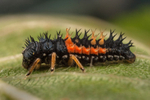
Harlequin Ladybird Larva showing spiny surface and typical orange/black colouration. Warwickshire, August 2012.

Harlequin Ladybird Larva

Harlequin Ladybird Larva showing spiny surface and typical orange/black colouration. Warwickshire, August 2012.
Photo: Harlequin Ladybird Larva. Harlequin Ladybird Larva showing spiny surface and typical orange/black colouration. Warwickshire, August 2012.
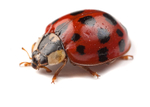
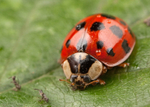
Harlequin Ladybird - [i]Harmonia axyridis[/i], succinea form. Warwickshire, June 2012.

Harlequin Ladybird

Harlequin Ladybird - Harmonia axyridis, succinea form. Warwickshire, June 2012.
Photo: Harlequin Ladybird. Harlequin Ladybird - Harmonia axyridis, succinea form. Warwickshire, June 2012.
Harlequin Ladybird - [i]Harmonia axyridis[/i], succinea form. Warwickshire, June 2012.

Harlequin Ladybird

Harlequin Ladybird - Harmonia axyridis, succinea form. Warwickshire, June 2012.
Photo: Harlequin Ladybird. Harlequin Ladybird - Harmonia axyridis, succinea form. Warwickshire, June 2012.
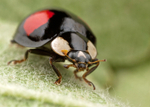
Harlequin Ladybird - [i]Harmonia axyridis[/i], spectabilis form. Warwickshire, July 2012.

Harlequin Ladybird

Harlequin Ladybird - Harmonia axyridis, spectabilis form. Warwickshire, July 2012.
Photo: Harlequin Ladybird. Harlequin Ladybird - Harmonia axyridis, spectabilis form. Warwickshire, July 2012.

© Ed Phillips 2026

Website by Photium
Log-in Manage website